A gathering older than memory.
Simhastha is not a festival. It is a rhythm the subcontinent has kept for two thousand years — a rhythm of water and fire, of sadhus and householders, of surrender and continuity.


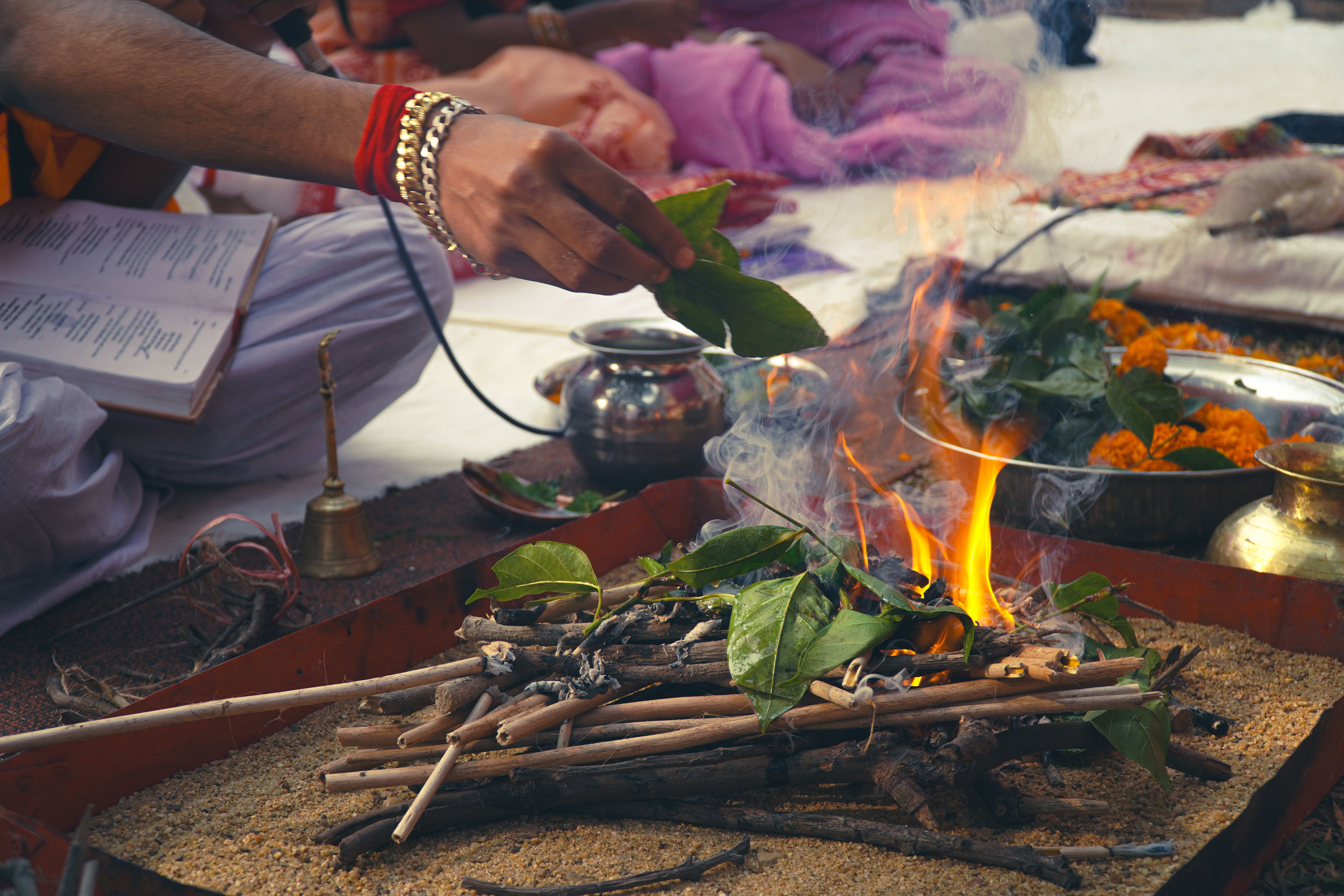
The Cycle of Twelve
Once every twelve years, when Jupiter enters Leo — the sign of Simha — the Mahakumbh returns to Ujjain. It is one of four sacred cities in India that hosts this cosmic rhythm, each a resonance of an ancient story of amrit — the nectar of immortality.
Ujjain, the Meridian of Time
In ancient India, Ujjain was the zero-meridian — the prime line from which time itself was measured. It sits upon the Tropic of Cancer, and its skies have held observatories, astronomers, and kings for two millennia. To arrive in Ujjain is to arrive in the geometry of time.
Mahakaleshwar, the Lord of Time
At the heart of Ujjain stands the Mahakaleshwar Jyotirlinga — one of twelve most sacred manifestations of Shiva. It is the only Jyotirlinga that faces south, and its pre-dawn Bhasma Aarti — the ritual of sacred ash — is unlike anything else in the Indian sacred landscape.
The Shipra
The Shipra is the river that gathers Simhastha. To bathe in her waters on a Shahi Snan day is, by tradition, to be washed of lifetimes. The five royal baths of 2028 are the tempo of the entire Mela.